OM
Conversations
When Quiet Became the New Luxury
0 min read
Written by
Sinan Torunlar
There’s a particular hush that arrives just before dawn — a stillness unfurled not by absence, but by gentle, unforced calm. The city is there, but distant; the day has not yet begun, and the only sound is breath and possibility. In those moments, quiet feels less like emptiness and more like space: a receptive pause before life’s momentum returns. In recent years, that sensation — once easy to overlook — has quietly become one of the most sought-after forms of luxury in the world of travel and design.
For much of modern history, luxury was defined by amplification — grandeur, spectacle, bustle, and abundance. Cities plastered themselves with nightlife, hotels competed with animated social scenes, and restaurants filled every corner with energy. Being amidst activity became shorthand for vitality. But as screens, alerts, and crowds followed us everywhere, a subtle exhaustion spread beneath the surface of our awareness. Noise ceased to be energizing and began to feel intrusive, demanding attention even when none was wanted.
It is no surprise, then, that travelers and designers alike have started to seek spaces that favor effect over volume, depth over display. The luxury travel landscape is shifting: from overt opulence to environments that prioritize intentional calm, refined restraint, and experiences that feel deeply personal. This movement — often referred to in hospitality as “quiet luxury” — reflects a broader cultural shift toward spaces designed for presence rather than performance.
Quiet Embedded in Experience
Quiet luxury isn’t a new concept, but its resonance feels particularly pronounced now. Across hospitality and travel, it’s defined less by what’s added and more by what’s restrained. It manifests in great quality, thoughtful detail, and a sense of refinement that doesn’t scream for attention. As one travel trend article notes, today’s sophisticated guests are not impressed by loud logos or ostentatious design — they are drawn to environments where everything has been considered but nothing demands to be showcased.
For example, Aman Tokyo — part of the globally renowned Aman brand — is frequently referenced for how it fosters calm above the urban intensity. The hotel’s design, materials, and lighting create a feeling of sanctuary rather than spectacle, offering guests an almost meditative experience despite its central location in one of the world’s busiest cities. Similarly, celebrated properties like La Mamounia Marrakech in Marrakech epitomize how thoughtful space and landscape can create an atmosphere that feels restorative. Its serene courtyards and garden spaces provide a contrast to the medina’s vibrant surroundings, allowing quiet to become part of memory rather than simply the absence of sound.
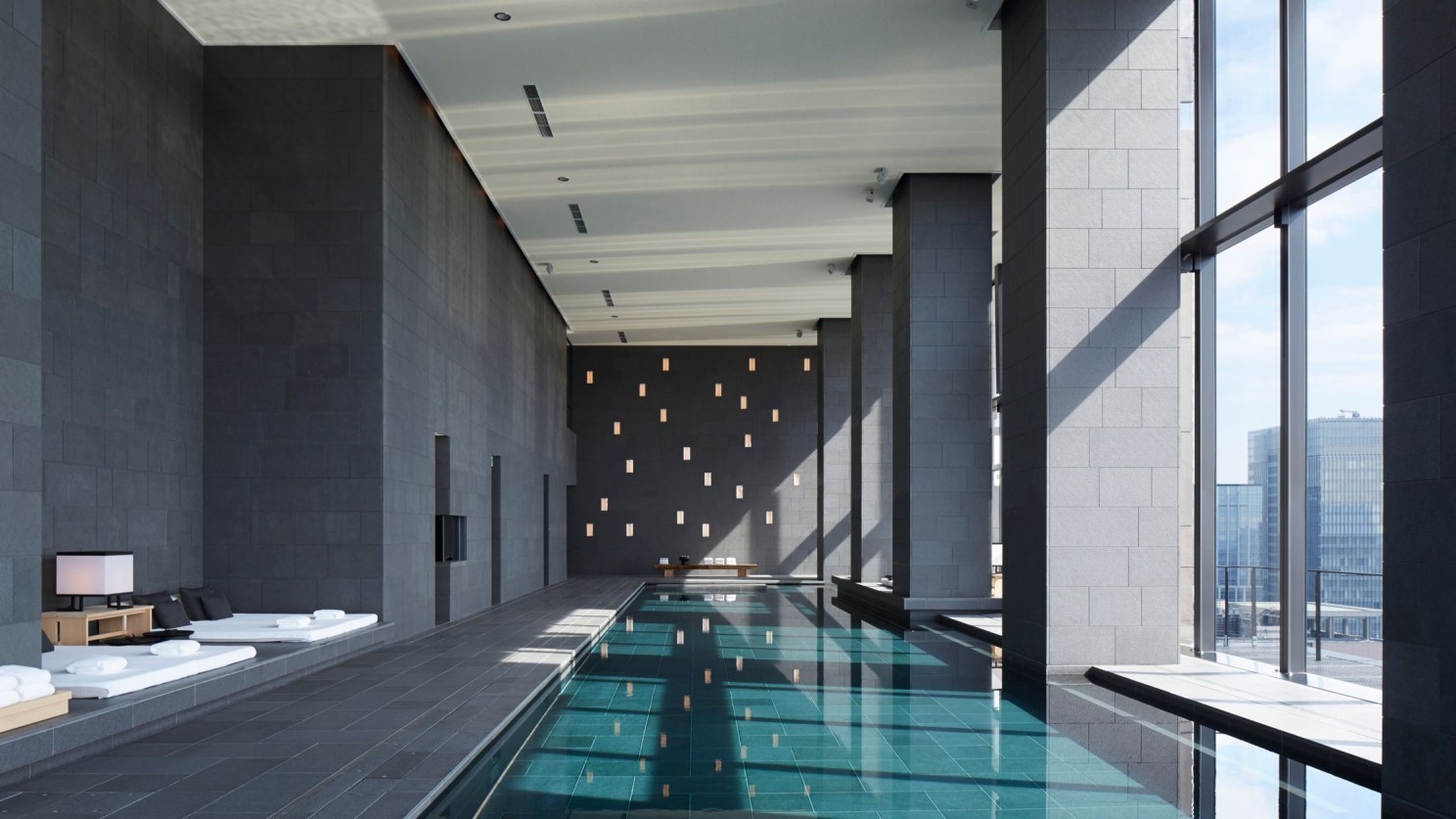
Courtesy of Aman Tokyo
Quiet luxury extends beyond classic hospitality brands. Across the world, there is increasing interest in hotels and retreats where privacy, space, and sensory restraint are central to the guest experience. Small boutique hideaways and secret hotels — those with fewer rooms and an emphasis on atmosphere over amenity checklist-making — often attract travelers precisely because they offer space to breathe.
This isn’t minimalism for its own sake, nor is it a rejection of comfort. Instead, quiet luxury is about crafting conditions under which a traveler can arrive fully into their own thoughts, unencumbered by noise, distraction, or expectation.
The Psychological Economy of Quiet
What transforms quiet from a nice aesthetic into a deeply felt experience is how it alters our engagement with time, attention, and internal experience. In a world where attention is constantly pulled in multiple directions, spaces that allow your senses to settle become profoundly meaningful.
Quiet environments invite a recalibration of time itself. Rather than structuring days around checklists or social obligations, guests can find themselves breathing deeper, noticing light and texture, and experiencing moments that unfold rather than rush past. Trip planners and trend forecasters now recognize that travelers are increasingly drawn to experiences offering rest, recharge, and mental ease — not just activities to fill an itinerary.
This shift also reflects a broader evolution in how people view luxury. It isn’t just measured in access or exclusivity anymore; it is increasingly about internal alignment and emotional return on experience. Quiet spaces communicate care without saying a word. In hospitality, this can be seen in design choices — soft lighting, thoughtful acoustics, high-quality materials — and in service gestures that anticipate comfort rather than command attention. These are the qualities that transform a moment into memory.
Psychologically, quiet becomes a canvas upon which experiences are registered more fully. Instead of being filtered through the noise of busy environments, experiences in quiet spaces are absorbed directly, often leaving a more lingering impression. This is why guests remember the gentle light on a morning balcony more vividly than the glittering bar where they once had a cocktail.
Rather than being ephemeral, these experiences stay felt long after departure because they are linked to how people arrive into themselves, not how they perform for others. Travel, in this narrative, becomes less about what you collect and more about what you carry forward — and that is a profound redefinition of luxury itself.
How Quiet Becomes Memory
There was a time when the loudest environments were seen as the most alive. Spectacle equaled excitement, and motion equaled relevance. Today, quiet is not a withdrawal from life, but a reframing of what life feels like when its rhythms are allowed to settle. Travelers are no longer seeking noise masked as energy; they seek calm that feels lived in, intentional spaces that support reflection rather than demand attention.
What makes quiet stay with us is not merely its absence of sound, but its presence in memory. Quiet environments — whether a softly lit suite in the heart of a city, a garden courtyard tucked away from circulating crowds, or a minimalist lounge designed for stillness — create context for experience rather than interruption. They invite travelers to enter insidethe moment rather than pass through it.
In this sense, quiet becomes more than a backdrop — it becomes a collaborator in how experiences are encoded into memory. Not every trip needs to be loud to be meaningful. Often, the most enduring recollections come from moments when external noise falls away and what remains is the texture of experience itself.
This is the essence of quiet luxury: not simply an aesthetic choice, but a psychological one, where the value of a place is measured not by its gestures of performance, but by its capacity to let presence settle, so that a traveler can feel not just visited, but restored.